
Fenofibrate is, among other fibrates, a variation of clofibric acid. It belongs to the lipid-lowering nucleus like nicotinic acids and statins. An increased level of triglycerides is the main spectrum of activity of fenofibrate. A cholesterol-lowering effect is less characteristic, but it is nonetheless present.
What is fenofibrate?
Fenofibrate (chemical name: 2- [4- (4-chlorobenzoyl) phenoxy] -2-methylpropionic acid isopropyl ester) belongs to the group of drugs known as fibrates, which are an important drug therapy for the treatment of hyperlipidemia, i.e. increased blood lipids. Fenofibrate is primarily used to treat increased levels of triglycerides in the blood by lowering them.
In contrast, there are statins, which are primarily used to treat high cholesterol levels. However, fenofibrate can also be used to treat cholesterol in the blood. Its main effect, however, lies in the triglycerides, which is why it is also used primarily for increased triglycerides in the blood.
A disturbed lipid metabolism should be treated as quickly as possible in order to guarantee protection from secondary diseases such as diseases of the cardiovascular system. The first choice is statins, which guarantee a strong lipid reduction. Fenofibrate and other fibrates are only second choice and are mainly used if the statins are not tolerated during therapy or if primarily only the triglycerides, not the cholesterol, are elevated.
Fenofibrate is a white, insoluble, crystal-like powder that is given in compact form as a tablet or capsule. After fenofibrate is ingested, it is broken down into clofibric acid, which is then excreted in the urine, which is why the dose should be adjusted if the kidney is damaged.
Pharmacological effect on the body and organs
The main effect of fenofibrate is to lower the plasma level of triglycerides. How this happens exactly has not been researched exactly. Nevertheless, it can be assumed that it has several effects. One of these is that fenofibrate activates PPARα. This is the peroxisome proliferator activated receptor, which binds itself to the DNA after fenofibrate has bound and influences the reading of some genes there and thus also changes the lipid metabolism.
On the one hand, it causes a stronger breakdown of the "bad" cholesterol LDL (approx. 10 - 25%). There is also a moderate increase in HDL (approx. 10%). The "bad" cholesterol is referred to as such because it is deposited in the vessels and thus causes atherosclerosis. In return, the "good" cholesterol transports the fats out of the vessels, for example, and causes them to be broken down. In addition, fenofibrate reduces the release of VLDL from the liver, which is also involved in calcifying processes in the vascular wall.
Fenofibrate also activates lipoprotein lipase, which promotes the breakdown of blood lipids. Other effects of fenofibrate primarily affect the vascular wall, where the inflammatory process is stopped by reducing the formation of inflammatory proteins. Another effect of fenofibrate is that it increases the risk of developing gallstones containing cholesterol.
Medical application & use for treatment & prevention
The most important indication of fenofibrate is an increased level of triglycerides in the blood. This can arise due to a primary disorder of the lipid metabolism, i.e. a congenital form of hypertriglyceridemia (increased concentration of triglycerides in the blood) or a secondary disorder, i.e. an acquired form of hypertriglyceridemia. The latter can have various causes, for example a poor diet, which can lead to obesity, but also anorexia.
Some metabolic disorders such as diabetes increase blood lipids. But kidney diseases are also to blame for an increased level of triglycerides. Secondary hypertriglyceridemia can also be iatrogenic, that is, by the doctor who prescribes lipid-increasing drugs, such as beta-blockers or cortisone.
Another possible application of fenofibrate is the metabolic syndrome. This is a dangerous combination of impaired carbohydrate metabolism, obesity, increased blood pressure and impaired lipid metabolism (triglycerides are increased while HDL is decreased).
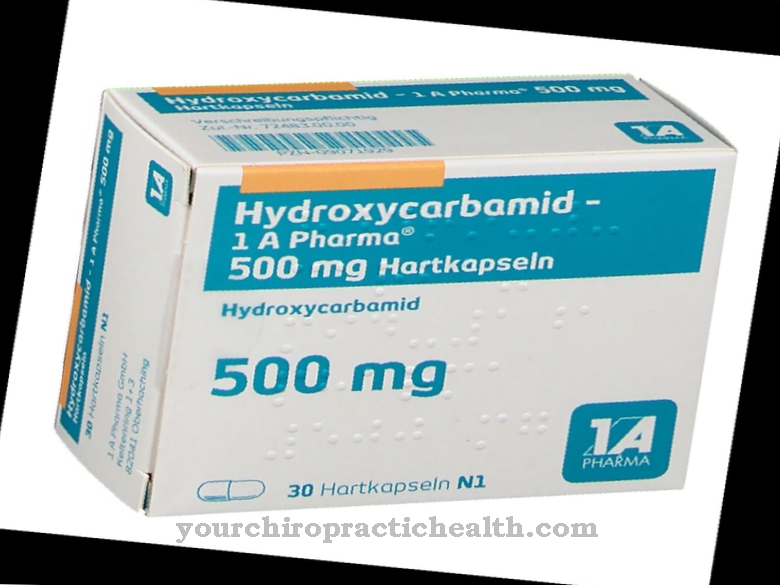
Fenofibrate is taken in the form of capsules or tablets. The half-life is around 22 hours, which makes it the longest effective fibrate. The dose is 200 mg once a day.
Risks & side effects
Fenofibrate can cause both nonspecific side effects and specific side effects that are typical of fibrates. Allergic reactions to the drug, which are associated with typical swellings, breathing problems and hives, are unspecific. Other rather unspecific side effects are, for example, chills with fever and a flu-like feeling, headache, swelling of the lower extremities, impotence and joint pain. In addition, dizziness and drowsiness may occur.
Since fenofibrate affects the gastrointestinal tract, unspecific complaints such as nausea, vomiting, and diarrhea can also occur here. Unwanted weight gain can also occur.
A muscle breakdown (rhabdomyolysis) is specific to fenofibrate. Patients experience severe muscle pain, cramps and general weakness. Other lipid-lowering drugs like statins can also cause rhabdomyolysis. Combination therapy with fenofibrate should therefore be avoided.
Another typical side effect of fenofibrate is that it increases the chances of developing bile cholesterol stones. Fenofibrate is contraindicated in gallbladder diseases, liver diseases, kidney insufficiency, as well as in nursing mothers and pregnant women.








.jpg)








.jpg)




.jpg)