
Valaciclovir is one of the most commonly used agents to fight herpes simplex virus infection and herpes zoster. The drug is processed in numerous preparations, represents a prodrug and is considered an antiviral.
What is valaciclovir?
Valaciclovir is a prodrug of acyclovir that is used to treat herpes infections and shingles. The term prodrug describes substances that - like valaciclovir - do not themselves produce any immediate effects or success, but only begin to work within the body. Valaciclovir is converted in the human body into the active ingredient acyclovir, which then kills herpes viruses.
As a prodrug, valaciclovir provides numerous benefits. For example, a bad taste is avoided, the solubility is increased and the bioavailability of the active ingredient is increased. In addition, valaciclovir is absorbed more quickly than similar substances that do not act as prodrugs.
In chemistry, the active ingredient is described by the empirical formula C 13 - H 20 - N 6 - O 4. Valaciclovir thus has a moral mass of 324.34 g / mol.
Pharmacological effect on the body and organs
From a pharmacological point of view, valaciclovir is not only an antiviral, but also a prodrug. The active ingredient is quickly absorbed in the human intestine, so that the bioavailability is considerably improved compared to similar drugs. The literature reports an availability of around 55%, which is more than five times the average value of 10%.
Once absorbed by the body, valaciclovir is converted to the active form acyclovir. This happens through metabolism (metabolism). Acyclovir is closely related to the nucleobase guanine, which is a component of DNA and RNA. This enables the substance to penetrate the metabolism of cells and switch them off. It does this by making it impossible for the virus to spread its DNA.
The specialty of acyclovir is that it only works where it is actually needed. Because the active ingredient only attacks cells that are already infected by the virus.
Due to its mechanism of action, valaciclovir is considered to be an antiviral that has antiviral properties against various herpes viruses (including simplex and zoster).
Medical application & use for treatment & prevention
Compared to other antivirals that are used to fight herpes, the area of application of valaciclovir is very broad. Because the substance is effective against almost all herpes viruses.
The most common types that valaciclovir is used against include: a. Cold sores (in the specialist field: herpes simplex), shingles and chickenpox (varicella-zoster virus), Pfeiffer's glandular fever, which is triggered by the Epstein-Barr virus, and the cytomegaly virus. Genital herpes can also be treated with valacyclovir.
The dosage required in each case depends on the underlying illness and the individual patient, so that the medical instructions for use must always be observed. In general, however, 1000 mg three times a day is appropriate for a healthy adult. The appropriate dose for children and adolescents under 12 years of age is lower.
Valaciclovir is most commonly given in tablet form. These are taken orally by the patient with sufficient water.The best-known preparations containing valaciclovir include Valtrex® in Germany, Austria and Switzerland, as well as Valaciclomed® and Valdacir®, which are only sold in Austria. There are also numerous generics.
Risks & side effects
There may be unwanted side effects after taking valaciclovir. However, this is not necessarily the case. The most common side effects include headache, nausea, dizziness, and general malaise.
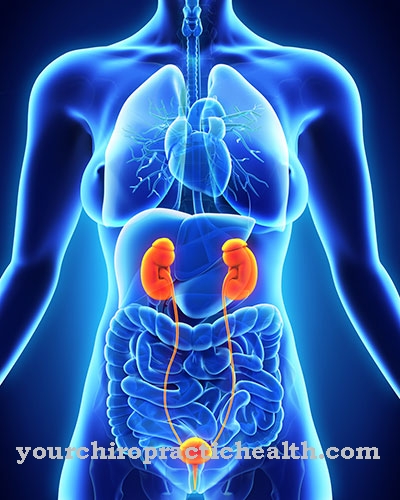
Occasionally, gastrointestinal discomfort can occur after taking valaciclovir. These make themselves felt as stomach pain, diarrhea, vomiting or slight cramps. In addition, there may be a state of confusion or skin reactions such as itching, rash or redness. In addition, photosensitivity may occur. Kidney failure or dysfunction of the kidney is very rare.
Valaciclovir must not be taken if hypersensitivity or allergy is known. In addition, attention must be paid to interactions. Valaciclovir is actively secreted in the kidneys via so-called organic anion transporters (OAT), which is why interdependencies with other organic anions such as probenecid are conceivable.
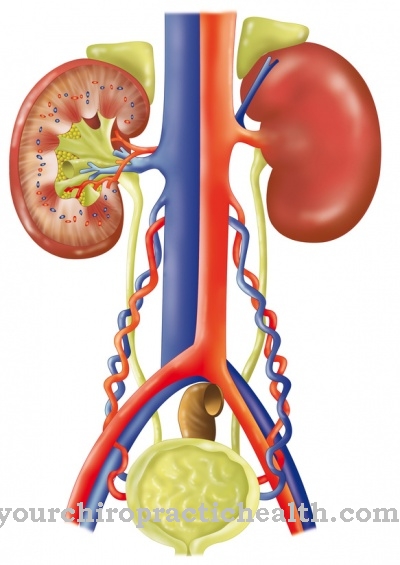
Particular caution is also required in combination with substances that are toxic to the kidneys. The doctor must always be kept informed of all preparations taken in order to minimize the risk of interactions.








.jpg)








.jpg)




.jpg)