The Endoderm is the inner germ layer of the blastocyte. Different organs develop from it through differentiation and determination, for example the liver. If this embryogenic development is disturbed, organ malformations can occur.
What is the endoderm?
The human embryo develops from the so-called blastocyte. During gastrulation, three different germ layers develop from the blastocyte: the inner, the middle and the outer germ layer. The inner cotyledon is also called the endoderm or Endoderm known.
The middle one is the mesoderm and the outer one is the ectoderm. In the developmental biology of tissue animals, the cell differentiation into three cotyledons is the first differentiation of the embryo into individual cell layers. The different structures are only formed from these cell layers. After further differentiation and so-called determination, tissues and organs are formed from the cotyledon cells. The cotyledons arise in the blastula.
Such is the embryonic stage after the morula stage, which completes the furrowing of the zygote. The early embryonic development of mammals is also described by the term triploblastic due to the differentiation into three germ layers. The cells of the three cotyledons are not yet determined, that is, they are multipotent. What types of tissue they actually become can only be determined with the determination that defines the development program of daughter cells of a particular cell.
Anatomy & structure
From about the 17th day the primitive streak forms during embryogenesis. This strip forms the entry point for the profiling and immigration of the epiblast cells. During their migration, these cells form pseudopodia and lose contact with one another.
This phenomenon is known as gastrulation. Depending on their origin and the time of influx, the epiblast cells move away from the primitive streak and migrate in different directions. After migrating through the knot of the primitive streak, the first cells replace the layer of hypoblasts and form the endoblasts, from which the intestine and its derivatives later develop.After their migration through the primitive node, the remaining cells move cranially at about the same time, where they form two further structures.
The prechordal plate forms cranial to the primitive node. In addition, the process of the notochord develops there. The rest of the immigrated cells generate a third germinal layer known as the intraembryonic mesoderm. Only on the cloacal membrane and the pharynx membrane does not develop a middle cotyledon. Here the ectoderm and endoderm lie directly on top of one another. Caudally, the cloacal membrane forms the future opening of the rectum and the urogenital tract.
Function & tasks
Like the mesoderm and the ectoderm, the endoderm is primarily relevant for the differentiation of the individual body tissues and organs. The blastula is the starting point for gastrulation. In higher mammals it is the blastocyte, i.e. a hollow sphere made of a single layer of cells. This blastocyte is transformed into a bilayered beaker germ called a gastrula.
The endoderm forms the inner of the two primary germ layers is the endoderm. The exterior of the cotyledons is the ectoderm. The endoderm has an opening to the outside. This opening is also known as the original mouth or blastopore. The endoderm becomes common Primeval intestine or Archenteron called. The mesoderm arises around the same time as the development of the two primary cotyledons. The further development of the original mouth makes man into a so-called new mouth or deuterostom. In contrast to the primordial mouths, the primordial mouth develops into the anus in the new mouths. The mouth breaks through only after gastrulation is complete on the opposite side of the blastula.
A basic movement of gastrulation is the initial invagination of the endoderm into the blastocoel of the blastula, which appears as an internal and fluid-filled cavity. The deformation of pole cells on the blastula creates an airless space, the inner part of which is the endoderm. The outer part is the ectoderm. The endoderm narrows the primary body cavity during the deformation. The prospective endoderm later rolls up. Endodermic cells immigrate. Blastula cells eventually cut off the endodermic cells into the blastocoel. In yolk-rich eggs, the prospective ectoderm later also overgrows the endoderm.
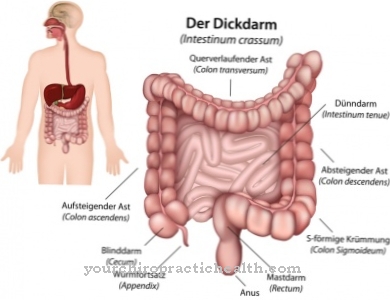
Gastrulation overlaps with the onset of subsequent processes, such as neurulation. The endodermic tissue forms various organs in later phases of embryonic development. The endodermal organs include the gastrointestinal tract, the digestive glands such as the liver or the pancreas and the respiratory tract, especially the thyroid, urinary bladder and urethra.
Diseases
In connection with the endoderm, genetic diseases in particular play a role. For example, the inner cotyledon can be affected by mutations that cause dysplasias during embryonic development or leave certain organs partially or even completely missing.
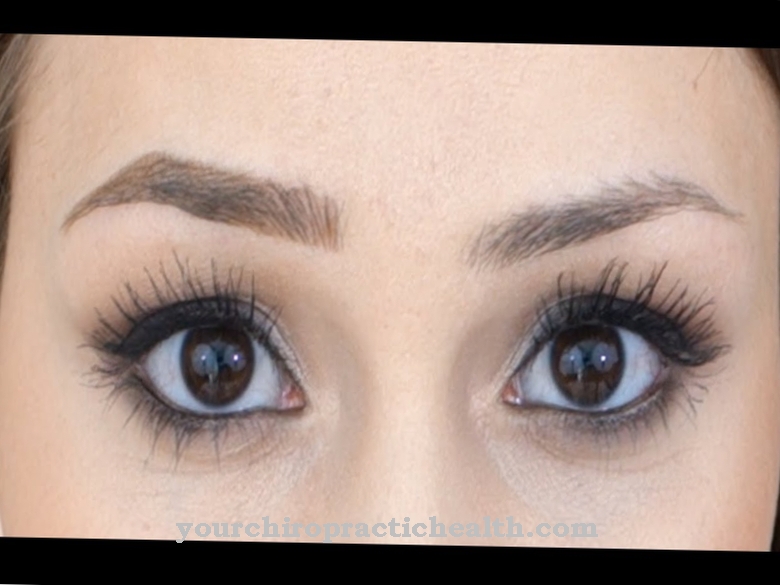
In endodermal tissue, the most common malformations affect the urinary tract. The liver and pancreas can also be affected, however. Endodermal dysplasias can be hereditary. However, they can also be triggered by exogenous factors. The so-called cat's eye syndrome, for example, is known in this context. This is a rare and hereditary disease that is associated with key symptoms such as the vertical-oval gap in the iris or a malformation of the rectum.
A developmental defect in the so-called chordablastema is assumed to be the cause of the dysplasia. Genetically determined cases are associated with a mutation of the RAS-homologous gene or the homobox gene. The mutation of these genes is said to cause a disturbed separation of endoderm and neuroectoderm. In addition to endodermal dysplasias, ectodermal and mesodermal dysplasias and dysgenesies are also a common cause of congenital diseases and can coincide with endodermal malformations or even overlap causally.





.jpg)