
The active substance Flecainide is assigned to the antiarrhythmics. It is used to treat cardiac arrhythmias.
What is flecainide?
Flecainide is an anti-arrhythmic drug that is used to treat irregular heartbeat. The discovery of the drug took place in the 1970s. It was approved in Europe in 1982.
In Germany, the prescription drug was launched under the trade names Flecagamma® and Tambocor®. In 2004 the patent protection for flecainide expired. After that, various generics containing the drug were offered in Germany.
Flecainide has the disadvantage that it can itself cause cardiac arrhythmias. This happens primarily through interactions with other drugs or too high a dosage.
Pharmacological effect on the body and organs
Flecainide belongs to the class Ic antiarrhythmics. This means that the medicine works in the same way as the other antiarrhythmics in this group.
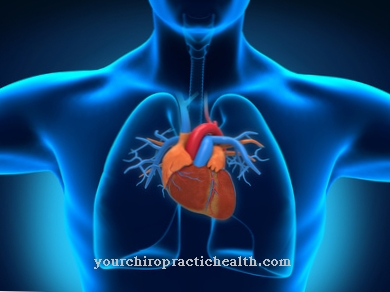
The human heart consists of a chamber (ventricle) and an atrium (atrium) on both sides. From there, the blood is pumped out via a valve mechanism.
The heart rhythm arises within the sinus node of the right atrium. There are special pacemaker cells, whose function is to clock the heart pumping speed. First they let the two atria contract. This is followed by the two heart chambers.
A cardiac arrhythmia occurs either in the ventricle or in the atrium. It can also affect both structures at the same time. If the heart beats too intensely, which doctors call tachycardia, its contraction is so rapid that it is no longer able to pump blood effectively.
This is where flecainide comes in. The active ingredient reduces the conduction speed of the stimulus conductors of the sinus node. The impulse for the tachycardia comes either from the heart chamber or from the atrium.
Flecainide is one of the sodium channel blockers. This means that the active ingredient stops the supply of sodium ions. As a result, no further action potentials can form, which leads to the attenuation of cardiac muscle activity. In this way, the heart rate can be slowed down.
Flecainide works quickly so that it does not need to be converted within the body. Since the organism has access to the full dose of the drug, the patient's condition quickly improves. Flecainide is therefore also suitable for the therapy of life-threatening cardiac arrhythmias.
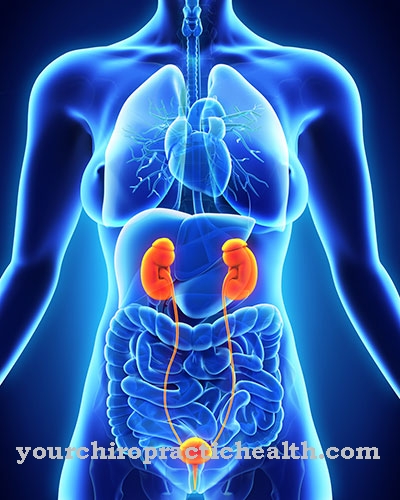
Following its ingestion, flecainide can be quickly absorbed by the blood through the intestines.The highest concentration occurs after around three hours. The breakdown of the active ingredient takes place in the liver. Its body excretion with the urine takes place via the kidneys. After about 20 hours, only about 50 percent of the drug is in the body.
Medical application & use for treatment & prevention
Flecainide is used to treat special forms of cardiac arrhythmias. These are supraventricular tachyarrhythmias that can be life threatening. Another area of application for the active ingredient is an irregular and rapid heartbeat due to tachycardial supraventricular cardiac arrhythmias such as palpitations. This starts from the AV node of the heart and is known in medicine as AV-junctional tachycardia.
Further indications are paroxysmal atrial fibrillation and supraventricular tachycardia in WPW syndrome. In addition to treating cardiac arrhythmias, flecainide is also suitable for preventing them.
The drug is taken in the form of tablets. The patient takes this with water during or after a meal. The usual dosage is 50 to 100 grams of flecainide twice a day. If the patient has a higher body weight or a special case, up to 400 milligrams can be administered per day. As a rule, the treatment starts slowly with a low dose, which gradually increases as the disease progresses. By doing this, patients tolerate the medicine better and have fewer side effects.
You can find your medication here
➔ Medicines for cardiac arrhythmiasRisks & side effects
Taking flecainide can have undesirable side effects. These primarily include visual disturbances, dizziness and disorders of balance. In addition, about 10 out of 100 patients experience headaches, sleep problems, anxiety, depression, sensory disorders such as tingling, tremors, tiredness, rashes and redness on the skin, feelings of weakness, tinnitus, nausea, vomiting, breathing difficulties, water retention, constipation and cardiac arrhythmias.
Other side effects can include abdominal pain, gastrointestinal problems, unsteadiness when walking, movement disorders, increased sweating, drowsiness, diarrhea, refusal to eat and fever.
In rare cases, people also suffer from nettle rash, hair loss, nerve disorders in the limbs, memory problems, cramps, pneumonia, and confusion or delusions. Most side effects occur at the start of treatment and get better as the treatment progresses. In some cases, reducing the dose also helps.
If the patient is hypersensitive to flecainide, if there is limited cardiac output or a blockage in the conduction of excitation within the atrium, the antiarrhythmic must not be taken. Life-threatening ventricular arrhythmias are an exception.
The use of other medicines that affect the heart can also be problematic. These are mainly cardiac glycosides such as digitoxin or digoxin, beta blockers such as bisoprolol or metoprolol, and calcium blockers such as verapamil. If it has to be taken at the same time, it can make sense to reduce the dose of flecainide.
In addition, regular ECG checks should be carried out. Pregnant and breastfeeding women should not take flecainide. The same goes for children younger than 12 years.






.jpg)






.jpg)
.jpg)