
As Furosemide is called a loop diuretic. The drug has a diuretic effect and is used for edema or high blood pressure.
What is furosemide?
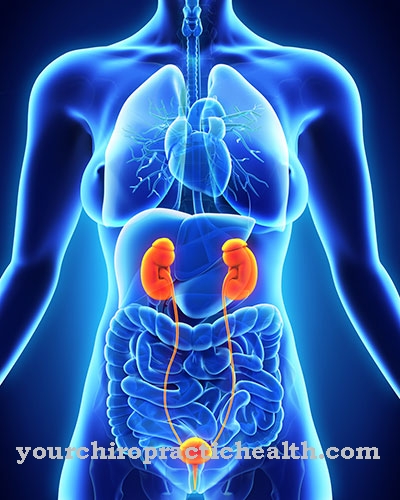
The active ingredient furosemide belongs to the group of drugs known as loop diuretics. These have the property of excreting larger amounts of tissue fluid from the body, which is done by inhibiting a transport protein in the kidney.
Diuretic drugs were given in the form of toxic mercury compounds as early as 1919. It was not until 1959 that the German company Hoechst developed an active ingredient called furosemide, which was mercury-free. The furosemide patent was registered in 1962, so the drug was soon used.
To this day, furosemide is one of the most powerful diuretic drugs.
Pharmacological effect
Furosemide has a strong and quick onset effect. This is achieved by blocking the transport protein Na-K-2Cl cotransporter within the kidney or the ascending section of the loop of Henle.
Due to the blockage, the uptake of water, chloride, sodium and potassium is inhibited. In this way, more urine is formed, which is then excreted more. This in turn leads to a rapid breakdown of water retention in body tissue.
Depending on the dose used, furosemide can stimulate the hormonal control of urine output. This effect is important in the treatment of functional disorders of the kidneys.
Furosemide is also able to lower high blood pressure. For this purpose, the drug stimulates the excretion of table salt (sodium). Because furosemide also dilates the blood vessels, it can stimulate blood flow to the kidneys. In the event of a weak heart muscle, furosemide takes the strain off the heart. For example, widening the veins causes the pressure to drop, which has a negative effect on the heart.
If furosemide is administered intravenously, large amounts of water of up to 50 liters per day can escape from the organism.
About two thirds of the loop diuretic is absorbed into the blood via the intestine. The liver metabolizes around 10 percent of the active ingredient. The body excretes the rest of the amount again without any changes, which occurs via stool and urine. After about 60 minutes, around 50 percent of the furosemide has left the organism.
Medical application & use
Furosemide is used in the treatment of edema (water retention in the tissue) due to heart disease, high blood pressure, liver diseases such as liver cirrhosis, kidney dysfunction, a water stomach (ascites) or severe burns.
Furosemide can also be used against pulmonary edema, as it flushes out the fluid quickly and effectively. The loop diuretic is also considered useful to prevent acute kidney failure.
Furosemide can be used both short-term and as part of long-term therapy. In most cases, the drug is given in the form of tablets or capsules that release the active ingredient in a delayed manner. Infusion is also possible.
The tablets are taken in the morning on an empty stomach with water. Higher dosages can be spread over the whole day and taken several times. The recommended dose varies between 40 and 120 milligrams a day. In some cases, however, a dose of up to 500 milligrams can be useful.
If treatment is given against high blood pressure, furosemide is usually combined with other antihypertensive drugs. This process increases the effectiveness and reduces side effects.
You can find your medication here
➔ Medicines against edema and water retentionRisks & side effects
About one in ten patients experience undesirable side effects after taking furosemide. These primarily include drowsiness, apathy, blood pressure fluctuations when changing body position, thirst, loss of appetite, increased urine excretion, muscle weakness, cardiac arrhythmias, abnormal sensations in the nerves, partial paralysis and flatulence.
Furthermore, it can lead to pronounced skin inflammation, redness, rashes, sensitivity to light and cramps. In rare cases, dizziness, head pressure, tension in the muscles, dry mouth, hearing disorders, gastrointestinal problems, anemia, gout attacks (with previous exposure), itching and inflammation of the pancreas occur.
In the worst case, furosemide can cause a blood volume that is too low, dehydration of the body and circulatory collapse. A thrombosis is also possible in older people.
The contraindications to furosemide include a severe decrease in potassium in the blood, severe liver dysfunction associated with loss of consciousness, kidney dysfunction in which there is a lack of urine production, and hypersensitivity to the drug or chemically related substances such as trimethoprim or sulfonamides.
If the patient suffers from gout, diabetes mellitus (diabetes), narrowed coronary arteries, protein deficiency, urinary flow disorders, circulatory disorders in the cerebral vessels, kidney dysfunction and liver shrinkage, he must exercise particular caution during furosemide therapy. In the case of a urinary flow disorder, a free flow of urine should be guaranteed, otherwise the urinary bladder is threatened to overstretch.
During pregnancy, it is advisable to take furosemide only in exceptional cases. The treatment must not last for a long period of time. In animal experiments, for example, the embryos were damaged by furosemide. Since the active ingredient has a negative effect on the blood circulation in the placenta and uterus, growth disorders in the child cannot be ruled out. Furosemide must not be taken during breastfeeding, as the agent passes into breast milk, which in turn causes harm to the baby.
In the case of premature birth, there is a risk of kidney stone formation in the child by administering furosemide. For this reason, the kidneys must be checked regularly with medical ultrasound examinations.









.jpg)








.jpg)



.jpg)