At the Neurofeedback it is a special variant of biofeedback. A computer analyzes the human brain waveforms and displays them graphically on a monitor.
What is neurofeedback?
Neurofeedback is a biofeedback of brain activity. This procedure uses encephalograms, which measure brain activity. The patient then receives feedback on a connected computer screen.
This feedback enables humans to regulate their brain activities more effectively. Incorrect regulation of brain activities is often considered to be the trigger for unwanted behavior or numerous diseases. However, through neurofeedback, humans can learn to compensate for their incorrect regulation.
The term feedback comes from the English and means "feedback". Such a feedback must exist between what a person wants and what he achieves. Humans couldn't ride a bike if they weren't able to feel the lean angle. However, humans do not perform most of the functions of the mind and body. Since they are controlled automatically, they can hardly be influenced. If such a function fails, there are only a few training options. In such cases, biofeedback can help. The biofeedback measures a variable to be trained with the help of special devices. Acoustic or optical feedback signals are used here.
Function, effect & goals
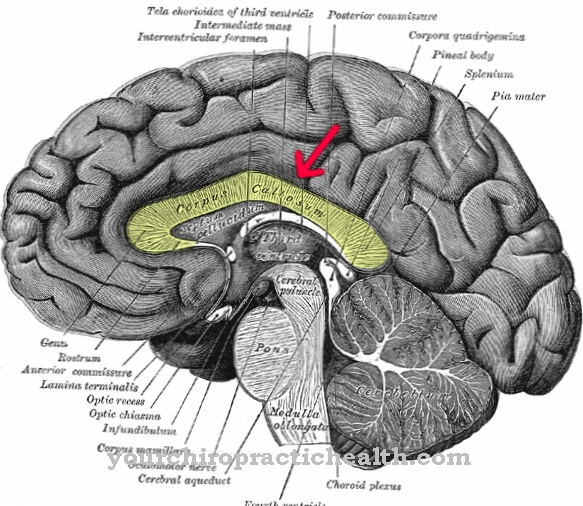
Neurofeedback is a biofeedback for the brain. Humans can neither feel nor influence the numerous brain functions directly. Neurofeedback is suitable for this purpose. A very simple but direct method is the electroencephalogram (EEG), with which the brain waves can be measured in order to obtain information about the processes in the brain.
The information that humans receive during this process is sufficient to put the brain into a biofeedback cycle. For example, in order to increase a person's attention, the EEG records and reports brief periods of inattention. This can happen up to two thousand times during neurofeedback training. Over time, the brain learns to reach a state of alertness.
The point of neurofeedback training is to achieve an appropriate state of the brain, which is then also maintained. In this way, neurofeedback increases the self-regulatory properties of the brain. Neurofeedback is used to treat numerous diseases and complaints. These include attention hyperactivity disorder (ADHD), autism, panic attacks, concentration disorders, sleep disorders, stress-related illnesses, post-traumatic stress disorder, epilepsy, anxiety disorders, depression, tic disorders, schizophrenia and strokes.
In addition, the special biofeedback is used to promote health, because it trains coping with and reducing stress and maintains mental flexibility in old age. Neurofeedback can also be used in school and upbringing by increasing school performance and compensating for instability. It is also suitable in professional life to achieve top mental performance.
Before using neurofeedback, the therapist has a detailed discussion with the patient. He deals with the patient's medical history, the symptoms and the goals of the treatment. Depending on the area of application, different test procedures such as a stimulus-reaction test can be carried out. After the conversation, the therapist decides whether neurofeedback makes sense and then creates a therapy plan.
Neurofeedback is carried out one to three times a week. After 20 sessions, there is another discussion with the therapist, who then decides, based on the goals achieved, whether the treatment should be continued. Good cooperation between patient and therapist is necessary for optimal neurofeedback sessions.
At the beginning of the neurofeedback, the doctor sticks three electrodes with a paste on the patient's scalp. The electrodes fulfill the task of measuring the fluctuations in the electrical potential caused by the brain. The therapist determines which parts of the brain the electrodes are attached to. The same applies to the frequencies to be filtered out of the electrical signals that the patient receives for feedback.
The brain waves are shown in the form of waves. However, because the patient has difficulty interpreting this, he receives a graphic sequence instead. This is mostly an airplane that ascends or descends depending on the change in brain activity. With this simplified representation, the patient learns to influence his electrical brain activities in a targeted manner.
You can find your medication here
➔ Medicines to calm down and strengthen nervesRisks, side effects & dangers
In order to be able to meaningfully influence the activities of the brain in everyday life, the patient needs plenty of practice. It is not uncommon for the therapist to give him a training screen that he uses at home. Children who suffer from ADHD can also take the screen to school and use it positively.
If the achieved goals are stable or if a lasting improvement of the symptoms has been achieved, the neurofeedback can be ended. Neurofeedback does not pose any risks. However, if the method is carried out incorrectly, undesirable side effects can sometimes occur. These include, above all, drowsiness, agitation, anxiety, depression, sleep disorders and epileptic fits. However, these side effects only last for a short time, unless the wrong training is done over a long period of time. In addition, there is a risk that the symptoms will be aggravated instead of reduced by the wrong training. For this reason, it is recommended that neurofeedback therapy is always carried out by trained specialists.
The electrodes attached to neurofeedback do not give the patient any electrical impulses, as is often wrongly claimed, but only measure brain activity. This process does not involve any dangers.