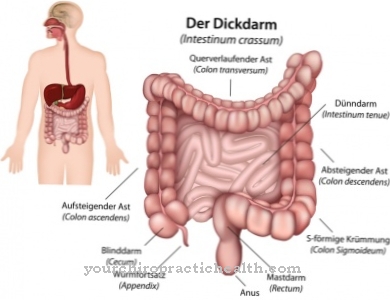
As Intestinal flora Doctors describe the entirety of the microorganisms present in the human and animal intestines. These influence digestion and the immune system and provide the body with vitamins. An imbalance in this bacterial ecosystem can lead to ailments and diseases in the intestinal area.
What is the intestinal flora?
The term Intestinal flora is a collective term for all bacteria and microorganisms that are found in the human and animal intestines. The large intestine naturally contains a higher density of bacteria than the small intestine.
The term “flora” comes from a time when bacteria were considered to be of plant origin. Even if this view is outdated, the term has held up. The complete intestinal flora develops in humans in the first years of life. There is an interaction between the organism and the microorganisms that reside in it, which is vital for both. The presence of a functioning intestinal flora is therefore of immense importance for the host.
Disturbances in this sensitive ecosystem can result from disease or permanent malnutrition. Such an imbalance can lead to pain and digestive discomfort, which significantly affect the person's wellbeing. In most cases, however, intestinal health can be restored by medical means.
Anatomy & structure
The main features of the human intestinal flora are formed before birth. However, the intestine is initially only sparsely populated. The bacteria resident there come mainly from the four known groups Enterobacteriaceae (especially Escherichia coli), Bacillus, Bacteroides and Enterococcus.
Food has an important influence on the formation of the ecosystem, and it makes a significant contribution to the quality of the intestinal flora, especially in children. In adults, there are between 10 and 100 billion bacteria in the intestinal tract, depending on their health, diet and culture.
There are at least 500 different species. In individual cases, up to 36,000 different types of bacteria were detected. The surface of the large intestine in particular, but also other parts of the intestinal tract, are colonized by the diverse microorganisms. Healthy adults have a total microflora mass of 1 - 2 kg.
Function & tasks
The entirety of the bacteria contained in the intestinal flora fulfills several functions that are of great importance for the host organism. The microorganisms located in the large intestine in particular help reliably to protect the organ from pathogens. In this context, doctors speak of Colonization Resistance.At the same time, the bacteria also have an impact on the entire immune system of the body and contribute to a more effective defense. While the food ingested by humans feeds the microorganisms, these in turn are helpful for numerous digestive processes. They support the natural breakdown of food components, stimulate bowel activity and supply the bowel with additional energy. Fatty acids are formed in the intestinal tract, especially during the digestion of fiber. These arise with the help of the bacteria located there. The difficult to digest food components are then metabolized and the remains excreted. This creates gases such as methane and hydrogen, which lead to foul-smelling flatulence - a process that is unpleasant for those affected, but is indispensable for digestion.So-called xenobiotics (exogenous toxins that are absorbed through food and the environment) are broken down by the numerous bacterial strains, which is an enormous relief for the organism. The fat-soluble vitamin K, which the body needs for the bones and blood clotting, among other things, cannot be produced by humans without the involvement of the intestinal flora. Last but not least, the intestinal flora also has an influence on the body weight of the individual. Whether a person becomes (severely) overweight is at least partly due to the relationship between certain intestinal bacteria.
Illnesses & ailments
If the intestinal flora is out of balance and the relationship between the different bacteria changes significantly, this can lead to clearly noticeable symptoms. These primarily affect the digestive tract and manifest themselves in the form of unpleasant flatulence, abdominal pain and a feeling of tension or a clearly bloated stomach.
Often it can be determined which part of the intestine is affected. A disturbance of the flora of the small intestine leads to a bloated stomach without gas. If the colon flora is affected, strong intestinal gases occur in addition to a bloated stomach. In addition, the immune system of the entire body is also affected by the imbalance.
This can lead to more frequent infections not only in the gastrointestinal area. Difficulties with digestion and sudden food intolerances can indicate a disturbance in the intestinal flora. The bacterial ratio is particularly unbalanced if the person concerned has a particularly one-sided or unhealthy diet. Medicines taken can also cause a temporary imbalance in the intestine due to their active ingredients.
The latter include, for example, antibiotics, which are prescribed for many bacterial diseases. These not only fight the bacteria responsible for the disease, but also the beneficial bacteria and can upset the relationship between the microorganisms in the intestinal tract.
In order to rebuild the intestinal flora, it is helpful to eat a balanced and above all high-fiber diet over a period of several months. Food with a high sugar and fat content should largely be avoided during this time.
The intake of probiotics has a supportive effect. Usually the intestinal flora regenerates itself; If this is not the case, a so-called stool transplant can be carried out by the doctor to restore the balance of the bacteria.
Typical & common bowel diseases
- Crohn's disease (chronic bowel inflammation)
- Inflammation of the intestine (enteritis)
- Intestinal polyps
- Intestinal colic
- Diverticulum in the intestine (diverticulosis)








.jpg)