The Vestibular gland is part of the female genitals and plays an important role in terms of moisturizing and protecting the vulvar mucous membranes. Inflammatory diseases can cause problems and pain, especially during sexual intercourse.
What is a vestibular gland?
The Vestibular gland or large vaginal vestibule (glandula vestibularis major) was named after the Danish anatomist Caspar Bartholin (1655-1738), who first discovered it. She will therefore too Bartholin's gland respectively Bartholin's gland called. It is located on both sides of the vaginal opening and is one of the so-called "accessory sex glands". These are glands that are found in the genital area in addition to the reproductive gonads (ovaries and testes). In addition to the vestibular gland in women, these glands also include the Skene gland, also known as the paraurethral gland (glandula paraurethralis) and the small atrial glands (glandulae vestibulares minores). The accessory sex glands are used to generate and secrete secretions. The vestibular gland contributes in particular to the moistening of the vaginal opening and thus plays an important role in sexual intercourse.Anatomy & structure
The roughly bean-sized vestibular glands lie on both sides under the labia majora (labiae majorae) and open in the lower third of the vaginal entrance on the inside of the labia minora (labiae minorae) into the vaginal vestibule region. The gland outlets are embedded in the vulvar erectile tissue and are only visible as tiny openings. In the normal state, the glandular bodies below the outer labia, no more than 1 cm in size, are neither visible nor palpable.
Only after an inflammatory change do they emerge as bulging elevations under the skin. The gland ducts that carry the secretion from the gland body to the gland outlet near the vaginal entrance are about 2-2.5 cm long. Adjacent - above the vaginal entrance - are the Skene glands and the exit of the urethra. The glandular tissue above the vaginal opening is also called the “female prostate” due to its prostate-like nature.
The Skene glands are also accessory sex glands. They secrete a thin liquid secretion known as “female ejaculate”. In contrast to the Bartholin's secretion, the secretion of the Skene glands does not serve any direct physiological purpose, rather it seems to be an analogous counterpart to male ejaculation during orgasm, which occurs in some women.
Function & tasks
The most important task of the vestibular glands is the moistening of the vaginal vestibule and in particular the vaginal entrance. When sexual arousal occurs, the glands increasingly secrete a secretion that passes through the glandular ducts to the vulva region, directly around the vaginal opening. This process is called in medicine: lubrication (lubricare - get wet / humidify). The moistening enables painless penetration of the penis during sexual intercourse. In addition, the secretion film protects the sensitive, thin mucous membrane of the vulva from cracks and small injuries.The acidic environment of the secretion makes it difficult for bacteria and fungi to penetrate and multiply and thus also offers a certain protection against infection. At the beginning of puberty - and with it potential sexual activity - the production of Bartholin's secretion in the vestibular glands also begins. With increasing age, the function of the gland decreases again. The hormonal changes in the female organism are responsible for this.
Women after menopause in particular produce significantly fewer Bartholin secretions, which can sometimes lead to sexual difficulties. However, the main reason for problems with inadequate lubrication is decreased vaginal secretions within the vagina. This problem can be successfully countered by using compatible lubricating gels. Some mammals also have vestibular glands to prepare for sexual intercourse - including female ruminants and cats.
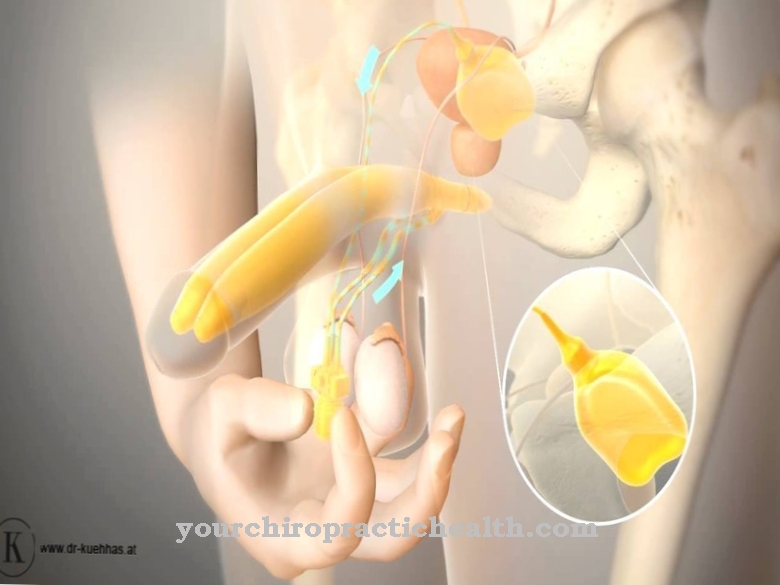
The male equivalent of the Bartholinian gland is the bulbourethral gland. This is also about the size of a pea and opens directly into the man's urethra. As pre-ejaculate (colloquially also known as "pleasure drops"), the glandular secretion is used to moisten the vagina in the same way as the fluid in the female vestibular glands and thus also contributes to easier penetration.
Illnesses & ailments
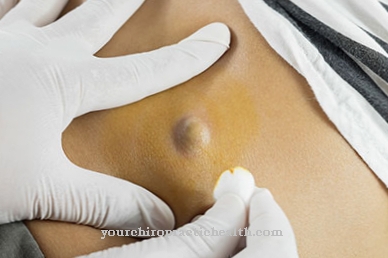
Bacterial infections (often from chlamydia, staphylococci, gonorrhea or E. coli bacteria transmitted from the intestinal area) can lead to painful inflammation of the vestibular gland, known as bartholinitis. Young women of reproductive age are particularly affected. About 2 percent of women will develop bartholinitis at some point in their life.
Usually only the gland ducts are inflamed at first, but the infection can also spread to the glands themselves. This can lead to redness and swelling, and in more severe cases, large, hardened cysts or purulent abscesses can form. The normally bean-sized glands can swell up to the size of a table tennis ball. The reason for this is a backlog of the fluid, which is formed by the glands, but can no longer drain due to swollen gland outlets.
Abscesses can also be a collection of pus. Trapped bacteria can easily multiply in this environment. This fact means that even after acute symptoms have subsided, inflammation caused by remaining pathogens can break out again and again (chronic bartholinitis). In order to prevent chronification and to accelerate the healing process, Bartholinitis should always be clarified gynecologically.
As a rule, antibiotic treatment is sufficient, but if the cyst formation is severe, surgical intervention to open the drainage pathways may be indicated. In older women with lump formation in the area of the vestibular gland, it must also be ruled out that the cysts are malignant tumors.







.jpg)




.jpg)